


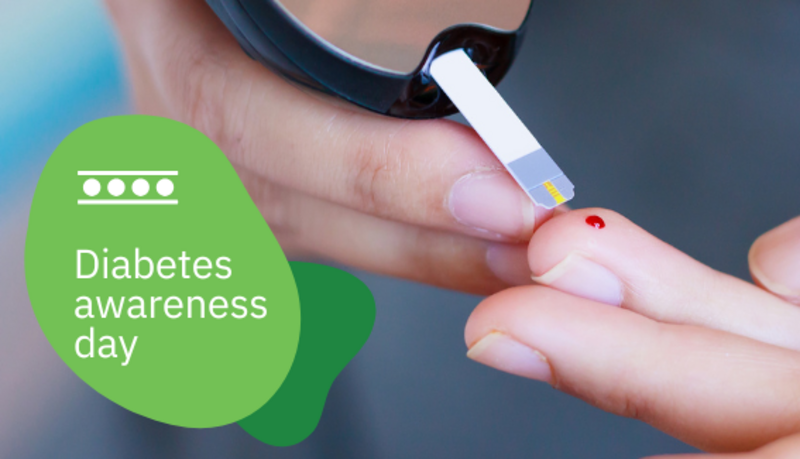
Every November, Diabetes Awareness Day highlights the importance of early detection and management of diabetes, a condition that affects millions worldwide. While public awareness often centres around lifestyle and type 2 diabetes, laboratory professionals play a crucial, and often overlooked, role in diagnosing type 1 diabetes mellitus (T1DM), which is an autoimmune disease driven by the body’s own immune response against pancreatic beta cells.
Understanding Autoimmune Diabetes
Type 1 diabetes is a chronic autoimmune condition in which the immune system selectively destroys the insulin-producing beta cells in the pancreas. This leads to insulin deficiency and ultimately, the inability to regulate blood glucose. Although most commonly diagnosed in childhood or adolescence, T1DM can also manifest later in life, including as latent autoimmune diabetes in adults (LADA), a slower-progressing form often misclassified initially as type 2 diabetes.
The incidence of type 1 diabetes is increasing by approximately 3–4% annually in developed countries, underscoring the need for early and accurate diagnosis. Laboratory-based serological testing is central to this.
Autoantibodies: Predictive and Diagnostic Markers
Autoantibodies against pancreatic islet cell antigens can be detected months to years before clinical onset, making them powerful tools for identifying individuals at risk of developing T1DM. In fact, at least one diabetes-associated autoantibody is detectable in 85–90% of newly diagnosed patients.
Key autoantibodies include:
- Anti-GAD (Glutamic Acid Decarboxylase) antibodies – the most sensitive marker for LADA and present in around 65–80% of newly diagnosed T1DM cases.
- Anti-IA2 (Tyrosine Phosphatase) antibodies – highly prevalent in children and adolescents, often associated with rapid disease progression.
- Anti-ZnT8 (Zinc Transporter 8) antibodies – detected in up to 80% of patients at disease onset, particularly those negative for GAD or IA2.
- Anti-Insulin (IAA) and Islet Cell (ICA) antibodies – important for early detection, especially in paediatric cases.
The presence of multiple autoantibodies correlates strongly with the likelihood of developing T1DM and forms the basis for disease staging — from presymptomatic to overt diabetes.
The Euroimmun Approach: Reliable Tools for Autoimmune Diabetes Diagnostics
We support clinical laboratories in the accurate detection of autoimmune diabetes through a comprehensive range of ELISA and IIFT-based assays. These assays enable quantitative and reliable detection of diabetes-specific autoantibodies, offering valuable support in both diagnostic and pre-symptomatic screening contexts.
The Euroimmun Anti-GAD ELISA (EA 1022-2) and Anti-IA2 ELISA (EA 1023-2) are IVDR-compliant assays designed for automated processing on all Euroimmun ELISA devices, including the EUROIMMUN Analyzer I, Analyzer I-2P, and EUROLabWorkstation ELISA. These next-generation ELISAs use bridging assay technology, delivering superior clinical performance compared with conventional methods while offering a shorter incubation time for improved laboratory efficiency.
Notably, the Anti-GAD ELISA is also validated for use in neurological diagnostics, aiding in the detection of GAD65 antibody-associated neurological diseases such as stiff person spectrum disorders adding further value for multidisciplinary laboratories.
Why Early Detection Matters
As advancements in diabetes care evolve, the importance of laboratory diagnostics is growing. Novel therapeutic approaches, such as the monoclonal antibody therapy rely on the early detection of diabetes-specific autoantibodies to identify at-risk individuals who may benefit from early intervention.
In this context, the laboratory’s role extends beyond diagnosis as it becomes a cornerstone in disease prevention and management strategies.
Looking Ahead
Diabetes Awareness Day is a timely reminder that every accurate result generated in the lab contributes to better patient outcomes. By embracing robust, automated and compliant solutions such as Euroimmun’s Anti-GAD and Anti-IA2 ELISAs, laboratory professionals continue to play a vital role in the global effort to detect, monitor and ultimately reduce the burden of autoimmune diabetes.
